


Featuring:
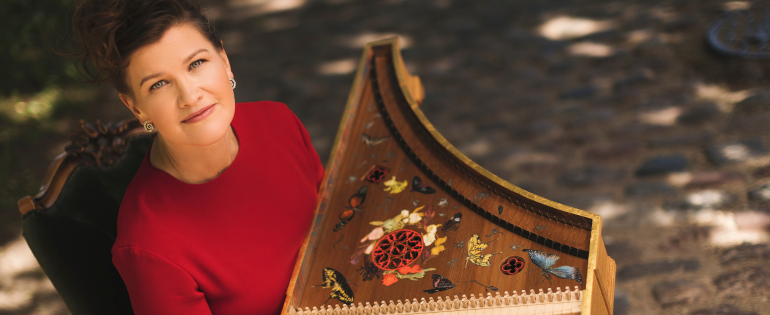
Ieva Saliete (harpsichord)
Rebeka Rusó (viola da gamba)
Programme:
Antoine Forqueray (1672–1745) and Jean-Baptiste-Antoine Forqueray (1699–1782) Selection from Pièces de Viole and Pièces de Clavecin
Christoph Schaffrath (1709–1763) Sonata in A major
Anonymous (Berlin School, c. 1760) Sonata in D
Carl Friedrich Abel (1725–1787) Selected pieces from the Drexel Manuscript
Wilhelm Friedemann Bach (1710–1784) Polonaise No. 8 in E minor, from Twelve Polonaises
Carl Philipp Emanuel Bach (1714–1788) Sonata in G minor
In the second half of the 18th century, the viola da gamba was gradually yielding its place in European musical life to the cello, yet at the Prussian court its refined, voice-like sound was still particularly cherished. This is reflected in the remarkable correspondence between the French gamba master Jean-Baptiste-Antoine Forqueray and the Prussian prince Friedrich Wilhelm, the future King Friedrich Wilhelm II. In his letters, the prince sought to uncover the secrets of the French gamba tradition and preserve an art form whose time was already drawing to a close.
The concert programme The Berlin Correspondence emerges from this historical dialogue. The music of Antoine and Jean-Baptiste-Antoine Forqueray reveals the splendour of the French Baroque — elegance and virtuosity, refinement and, at times, an almost theatrical force. In works composed in 18th-century Berlin, both the musical language and the relationship between the two instruments begin to change: in Christoph Schaffrath’s sonata, the harpsichord is no longer merely an accompanist but becomes an equal partner in dialogue with the viola da gamba.
In the second half of the programme, this instrumental conversation becomes increasingly personal and emotionally charged. An anonymous sonata from the Berlin School continues the story of the Prussian court’s musical world, while in Carl Friedrich Abel’s works the viola da gamba remains alone, revealing its most intimate voice. Wilhelm Friedemann Bach’s polonaise then draws the harpsichord into a more restless musical landscape, filled with contrasts and unexpected turns. Here, Baroque order meets a new sensitivity and freedom.
In Carl Philipp Emanuel Bach’s sonata, the two voices meet again. Yet the musical world is no longer the same as it was at the beginning of the concert: the refinement of the French Baroque has given way to a more direct and dramatic mode of expression, and beyond the fading gamba tradition, the outlines of a new era can already be discerned. This dialogue between a world in decline and one beginning to emerge is brought to life by two specialists in early music. Harpsichordist Ieva Saliete’s artistic work spans both early and contemporary repertoire, while Slovak artist Rebeka Rusó brings particular sensitivity to the viola da gamba’s supple, singing sound.
INFORMATION FOR OUR VISITORS:
Discounts:
Students, people with disabilities, and pensioners – €5
School pupils – 50%
Holders of a 3+ Family Card – 30%
Companions of people with a Group I or II disability – 50%
Groups of 10 or more visitors – 20%
To purchase group tickets online, please email sales@lso.lv.
Visitors must present proof of eligibility for the discount when attending the concert.
The festival is supported by the Ministry of Culture of the Republic of Latvia and the City of Liepāja.
